Pioneering next-generation green infrastructure and sustainable transport through rigorous system thinking and scientific inquiry — addressing three levels: System & Policy, Innovation, and Technical Solution.
Spanning pavement engineering, renewable energy integration, AI monitoring, and electromobility.
Precast Ultra-thin Whitetopping (PUTW) using ECC was developed for rapid retrofitting of existing road infrastructure into electrified roadways, enabling wireless inductive EV charging without steel reinforcement interference.
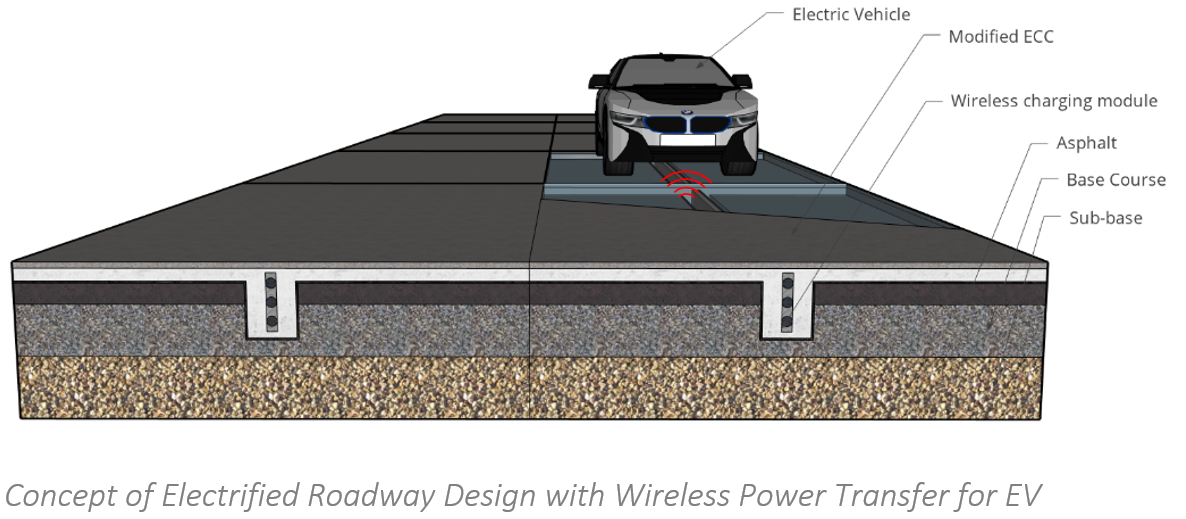 Concept of Electrified Roadway Design with WPT for EV
Corundum-integrated ECC (ECC-Cor) achieves BPN >70 and excellent durability over 100,000 load cycles. Supplementary cementitious materials (fly ash, slag) advance sustainability. Grooved surface treatment further improves skid resistance to BPN >90.
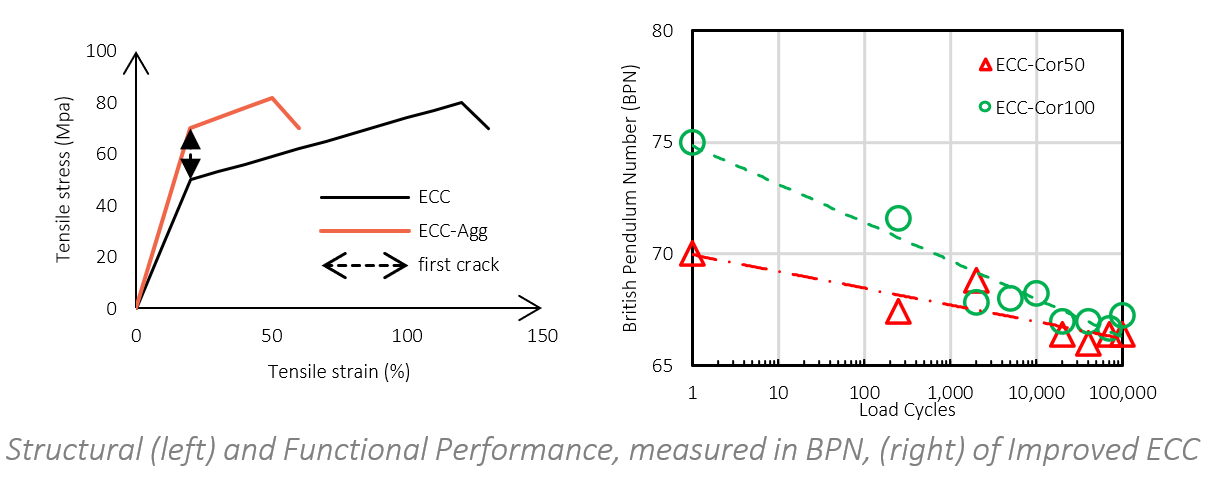 Structural (left) and Functional Performance BPN (right) of Improved ECC
Using a Tekscan I-Scan pressure mapping system with MATLAB and ANSYS, actual tire-pavement contact stresses were captured. Results show non-uniform stress distributions significantly influenced by load and tire inflation pressure, challenging conventional circular contact assumptions.
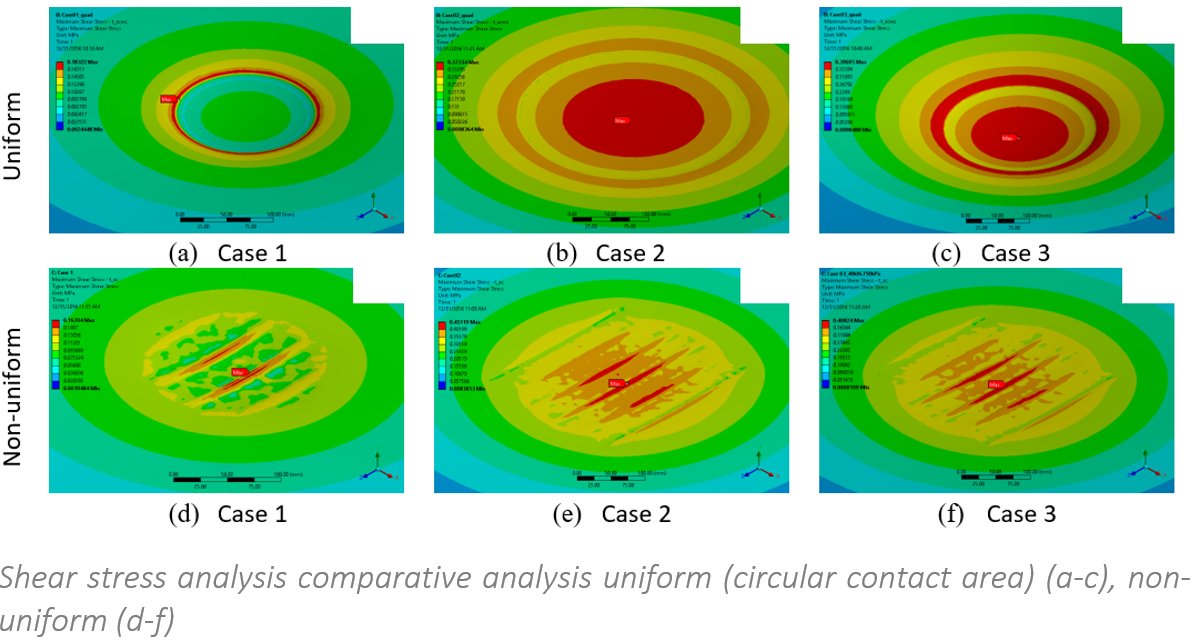 Shear stress: uniform (a–c) vs non-uniform contact (d–f)
A PV system adapted to Singapore's MRT network leverages 200,000 m² of track area, achieving at least 18 MWp capacity producing 22.56 GWh/year — saving over 261,600 tonnes of CO₂ per year, supporting Singapore's 2050 net-zero target.
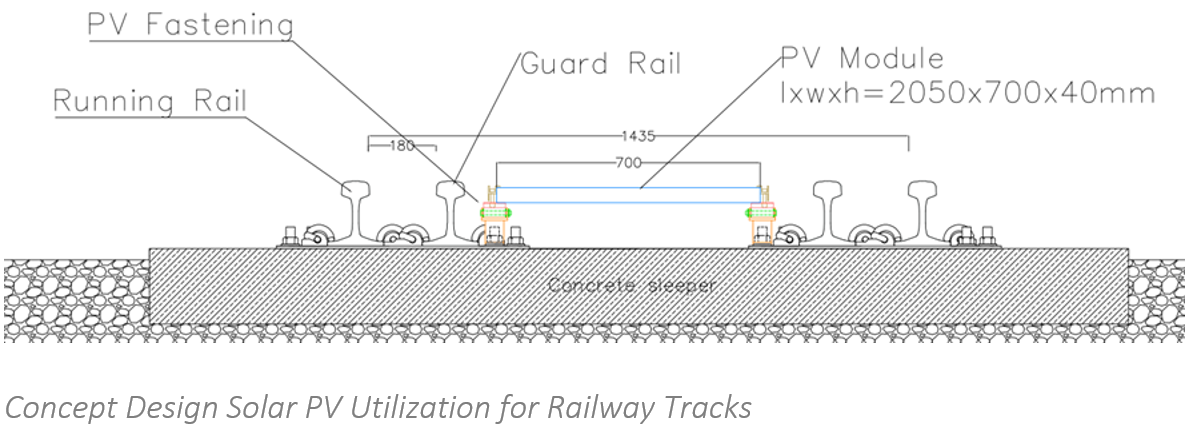 Concept Design Solar PV Utilization for Railway Tracks
Integrating PV panels into railway noise barriers addresses both Singapore's land-scarcity and rail noise concerns simultaneously. A T-shaped barrier design with full PV cladding generates ~157.6 GWh annually, equivalent to ~0.58% of national electricity demand while advancing noise reduction goals.
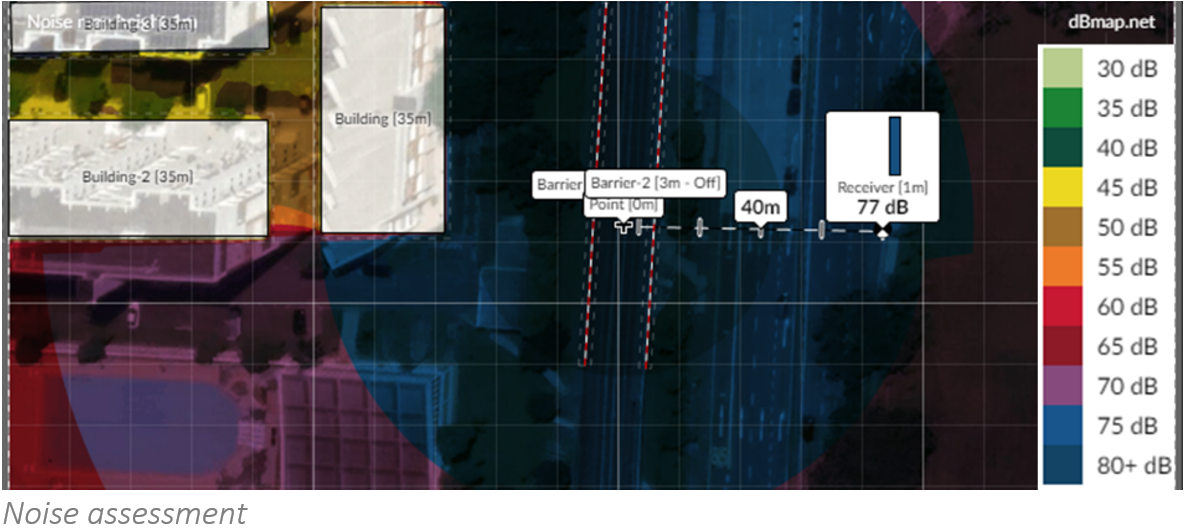 Noise assessment — PVNB concept along Singapore rail corridors
An ECC floor embedded with WPT modules enables continuous e-forklift operation, eliminating battery downtime. 3D FEM confirms ECC slabs can be 31% thinner than concrete. Lifecycle analysis shows +9.1% material handling capacity at nearly half the cost with significant CO₂ reductions.
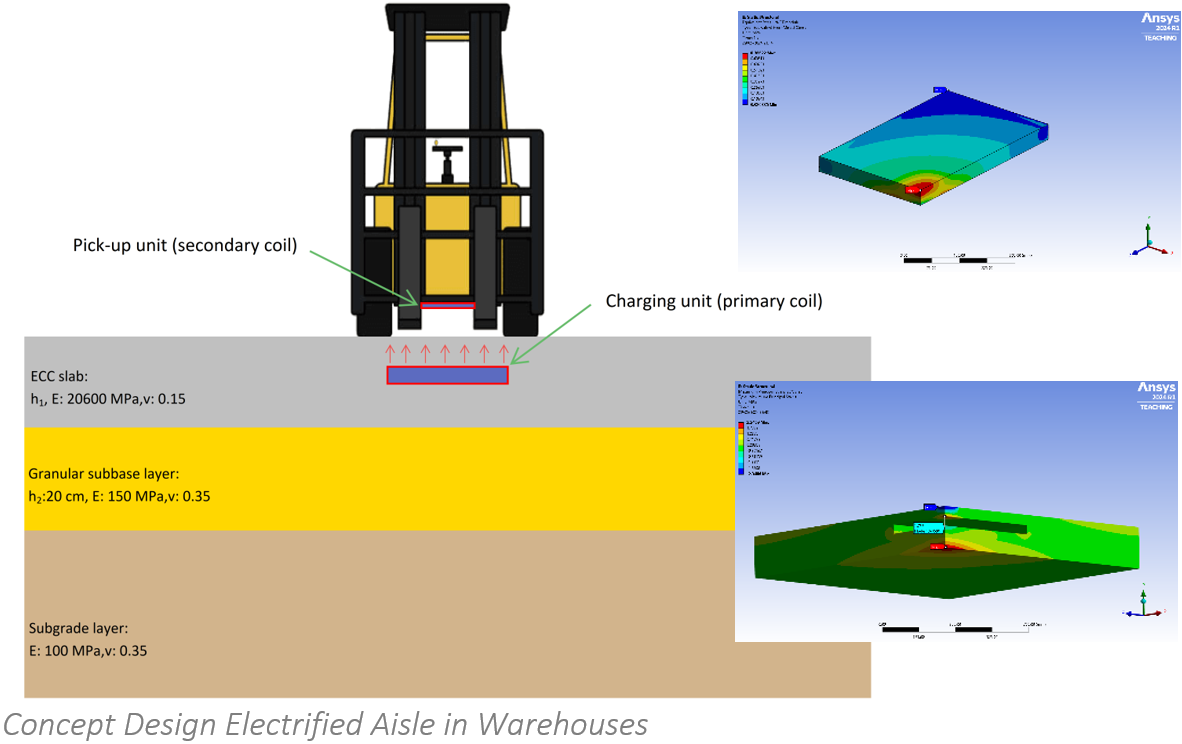 Concept Design Electrified Aisle in Warehouses
3D FEM model development for analyzing and evaluating texturing methods to improve skid resistance for ECC pavement. The model was validated against laboratory British Pendulum Number (BPN) results with differences below 5%, confirming a highly accurate predictive model.
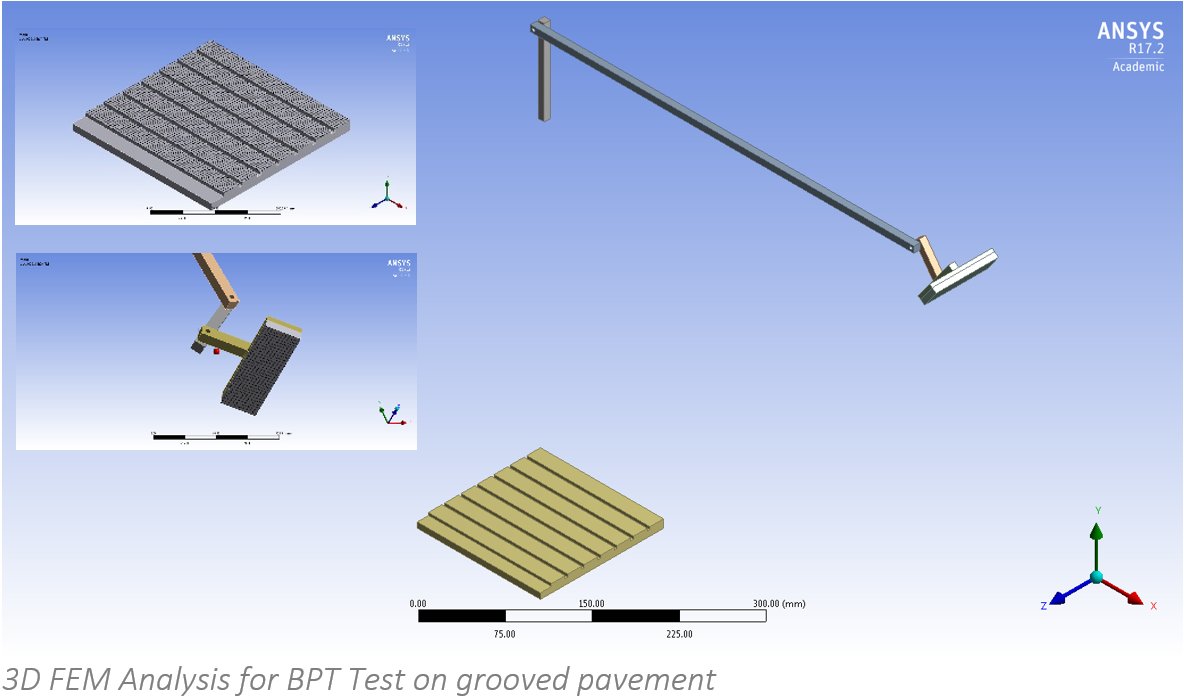 3D FEM Analysis for BPT Test on grooved pavement
ANSYS Fluent model simulating rainfall-loading on Singapore highways to optimize pavement surface geometry for drainage. Validated within 5.6% of laboratory results and 3.4% of analytical equations — supporting pavement surface property optimization.
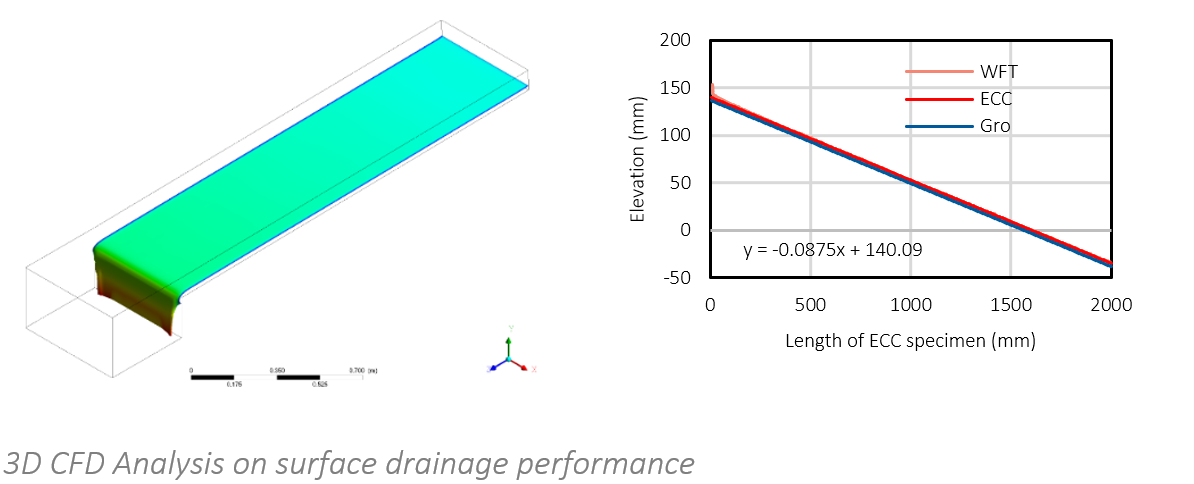 3D CFD Analysis on surface drainage performance
Using carbon-modified TiO₂ (K7000) and white fine aggregates, ECC for tunnel pavement achieves compressive strength >50 MPa, BPN ~80, and lightness value of 90. The material recovers 90% of its reflectance after 4 hours of visible light — enabling self-cleaning and air quality improvement.
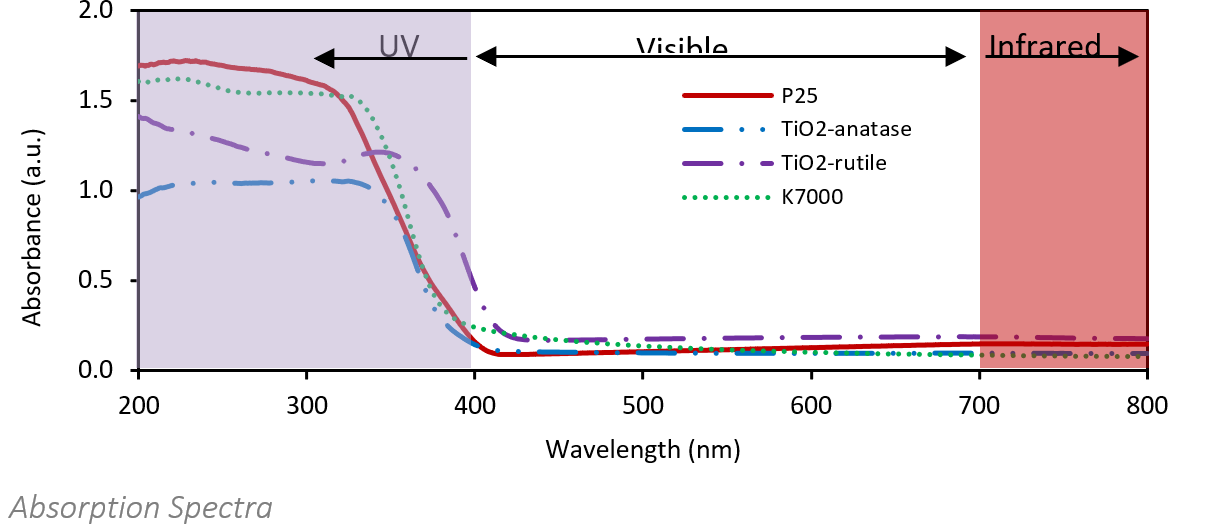 Absorption Spectra — TiO₂ photocatalytic materials for ECC tunnel pavement
Machine learning object detection mechanisms detect potholes and collect detailed distress information, enabling reliable road maintenance planning. Early detection allows road operators to allocate optimal technical solutions and budget for maintenance and rehabilitation before deterioration escalates.
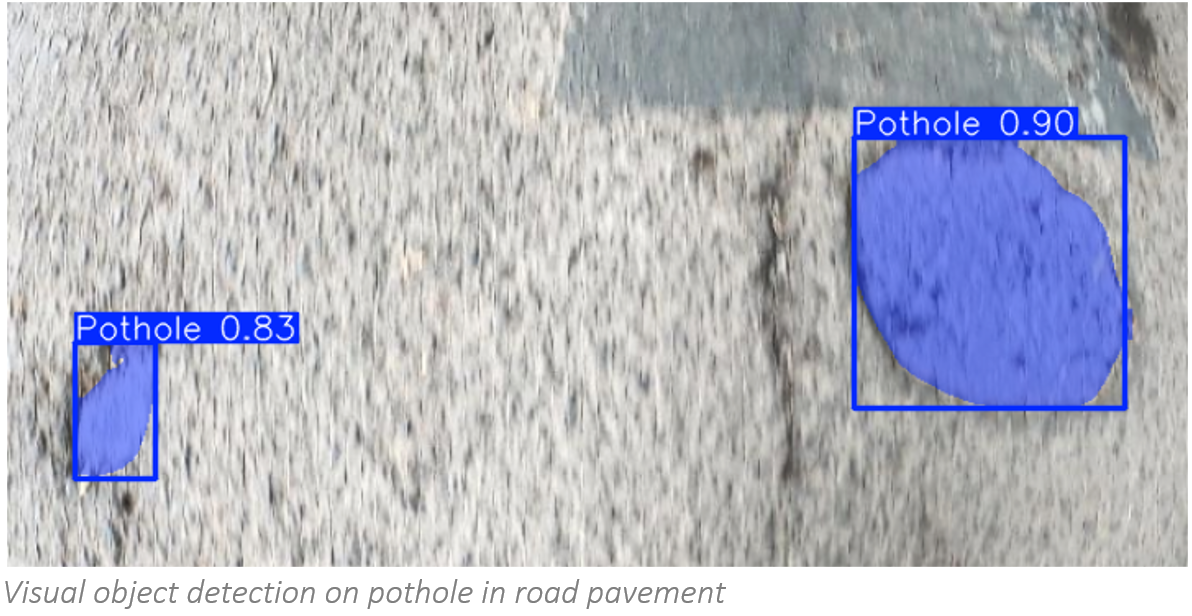 Visual object detection on pothole in road pavement
ML model trained on 7,000+ images identifies longitudinal, transversal, and alligator cracks, measures them, and assesses associated risk. The model achieves mAP50 of 0.863 — enabling automated Pavement Condition Index quantification and informed preservation decision-making.
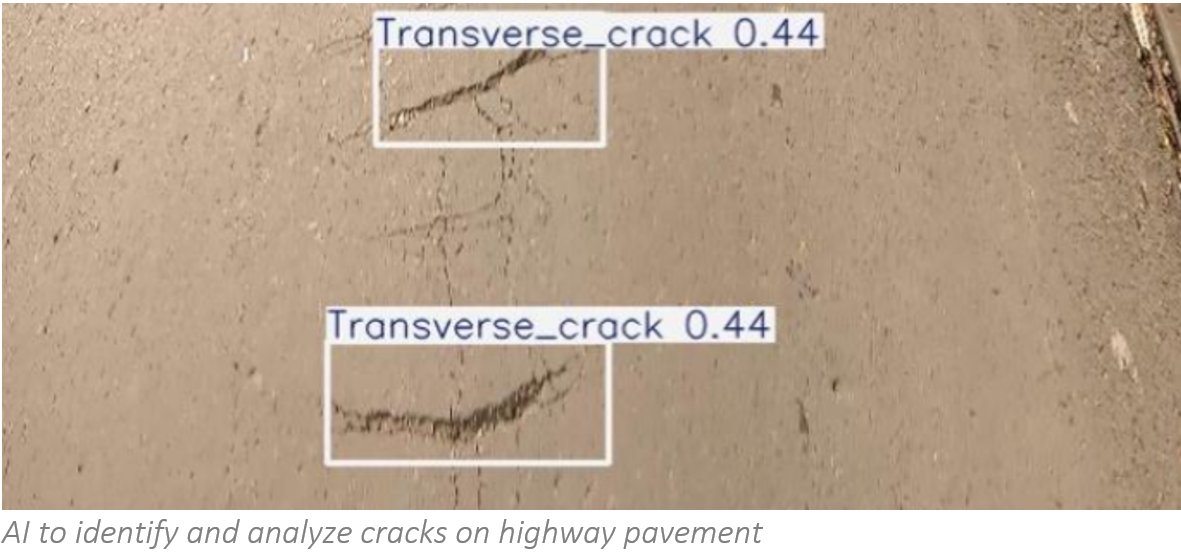 AI to identify and analyze cracks on highway pavement
A scalable AIoT-driven system delivers >85% accuracy in road condition assessment at 30–60 km/h. IoT sensors, data analytics, and ML transform pavement preservation into predictive management of the Pavement Condition Index (PCI), forecasting deterioration and identifying optimal intervention timing.
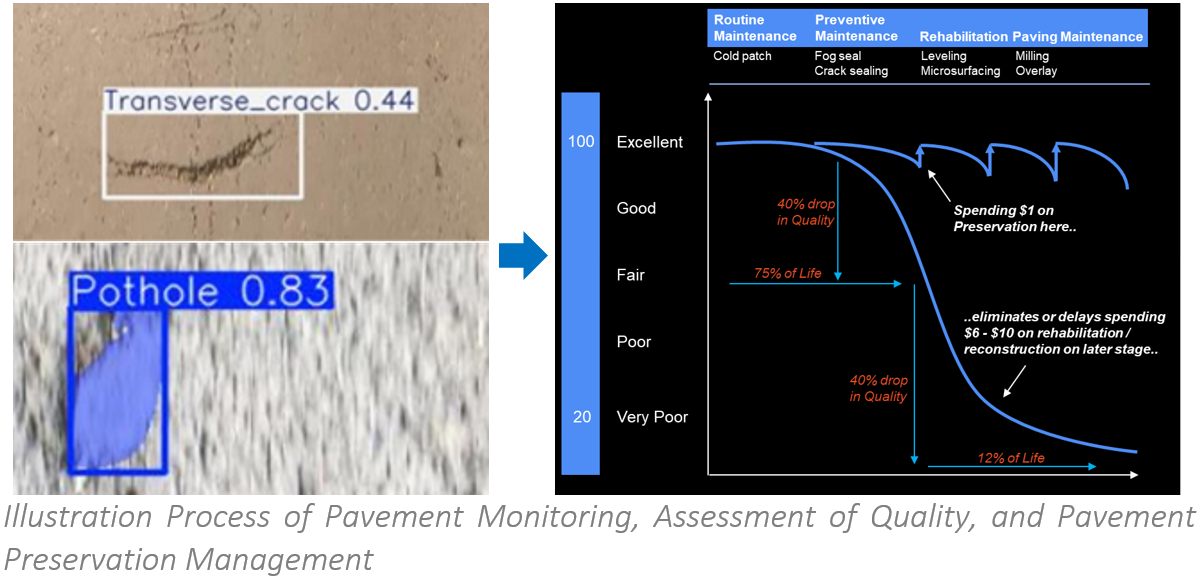 Pavement Monitoring, Quality Assessment & Preservation Management
26 publications · Citations: 182 · h-index: 7 · i10-index: 6
Citations: 182 · h-index: 7 · i10-index: 6. Full list: Google Scholar.
 PAGI
PAGI